NURS 1000H Capstone

Creating Calm- How i manage stress through small daily grounding practices.
Rationale
I chose this topic because stress is something I experience often as a student nurse balancing school, work, and daily responsibilities. Week 4 helped me realize that stress is both a physical and emotional response, not just a feeling. Understanding how the nervous system reacts under pressure made me more aware of my own stress patterns and how factors like sleep, workload, and my environment affect my mood and energy.
A key takeaway was learning that resilience is built through small, consistent grounding practices. This changed how I respond to stress. Instead of forcing myself to push through, I now pay attention to what calms me, what overwhelms me, and what helps me return to balance. This fits with the Six Pillars of Health, especially stress management, sleep, and emotional wellness. It also shapes my developing nursing identity because emotional steadiness and clear thinking are essential in high-pressure clinical situations.
Research reinforced what we learned in class. One article noted that “stress activates protective systems in the body, but when it becomes chronic, it can contribute to harmful physical and psychological outcomes” (Ghasemi et al., 2024). This helped me understand why stress sometimes affects my body as much as my mind. Another systematic review reported that “most nursing students experience moderate levels of stress, which can influence their learning and overall well-being” (Zheng et al., 2022). Knowing this made me feel less isolated and reminded me that managing stress is necessary for long-term success in nursing. Week 4 also highlighted that well-being is multidimensional. Emotional, physical, and social health all shape how I function each day. When I give myself time to slow down and reset, I feel more grounded and better able to handle challenges in school and in future clinical practice.
My Artifact
This reminder is the first thing I see when I pick up my phone, and it plays an important role in how I manage daily stress.

Artifacts 2

These tea quotes represent one of the small grounding practices I use during stressful days, and when I make tea, I pause to read the message on the tag before drinking it. Messages like “You are unlimited” and “Celebrate your successes and failures” help me practice self-compassion and support my emotional wellness and stress management.
Artifact 3
This photo shows a meditation technique I learned in this class that has now become part of my routine for managing stress. Using my lavender oil, blanket, and diffuser helps me calm my mind and body, supporting the grounding practices we discussed in Week 4.

References
Ghasemi, F., Beversdorf, D. Q., & Herman, K. C. (2024). Stress and stress responses: A narrative literature review from physiological mechanisms to intervention approaches. Journal of Pacific Rim Psychology, 18. https://doi.org/10.1177/18344909241289222
Zheng, Y., Jiao, J., & Hao, W. (2022). Prevalence of stress among nursing students: A protocol for systematic review and meta-analysis. Medicine, 101(31), e30113. https://doi.org/10.1097/MD.0000000000030113
Discovering Value Alignment in My Developing Nursing Identity
Rationale:
I chose this topic because values are an important part of who I am as a person and who I want to become as a nurse. Week 3 helped me understand that my personal values do not disappear when I enter the profession. Instead, they guide how I think, act, and interact with patients. The lecture emphasized that nursing values such as dignity, respect, compassion, and advocacy are not just expectations, but qualities that shape the foundation of patient care. What stood out to me was seeing how much my own values already align with professional nursing values, especially kindness and being helpful. This made me more aware that the way I treat people in my daily life will directly influence how I provide care in future clinical settings.
The research I reviewed also strengthened this understanding. One study explained that “professional nursing values become part of a student’s identity and guide how they interpret situations and respond in real practice” (Ozdemir et al., 2025). This connects to my experience because I know that how I respond to patients will come from the values I hold. Another study highlighted that meaningful student–patient relationships are built through mutual learning and respectful communication, showing that “student–patient relationships are most meaningful when both sides learn from each other through respectful dialogue, which helps students grow personally and professionally” (Suikkala et al., 2020). This relates to my growth as a future nurse because it reminds me that nursing is not just about performing skills. It is about building trust, listening, and understanding patients as partners in their care.
Overall, Week 3 helped me see that values shape nursing identity, influence patient relationships, and support ethical decision-making. This topic matters to me because when my values are clear and aligned with nursing, I feel more confident, more grounded, and more capable of becoming the kind of nurse I want to be.
Artifact
This certification represents my commitment to patient safety and professional responsibility. Keeping my CPR and First Aid training current shows that I value competence, preparedness, and the ability to respond confidently in emergencies. It reminds me that providing safe care requires ongoing learning and dedication to maintaining essential nursing skill.

Artifact 2
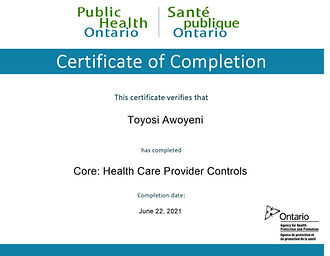
My artifact for this topic is my Public Health Ontario Certificate of Completion for Health Care Provider Controls. This certificate represents responsibility, safety, and professionalism, which are core nursing values. Completing this training shows that I take infection control, patient safety, and ethical practice seriously. It reflects my commitment to protecting others and maintaining high standards of care. Using this as an artifact demonstrates that my values are already influencing my actions and preparing me to enter the profession with a strong foundation of integrity and accountability
References
Ozdemir, N. G., Tanrıkulu, F., & Baykal, U. (2025). Professional values and professional identity in nursing students: A systematic review. Nurse Education Today, 136, Article 106928. https://doi.org/10.1016/j.nedt.2024.106928
Suikkala, A., Koskinen, S., & Leino-Kilpi, H. (2020). Patients’ involvement in student nurses’ clinical learning: A systematic review. International Journal of Nursing Studies, 109, Article 103613. https://doi.org/10.1016/j.ijnurstu.2020.103613
NURS 1000H. (n.d.). Week 3 lesson slides: Values and professional identity. Trent University.
How Sleep, Nutrition, and Emotional Regulation Work Together in Wellness
I chose this topic because nutrition, sleep, and emotional regulation directly affect how I function as a student nurse balancing school, work, and personal responsibilities. This week taught me that these habits are interconnected and influence my mood, stress levels, concentration, and overall well-being. Learning about the science behind sleep and nutrition helped me understand why certain patterns make me feel energized while others make me feel overwhelmed. It also showed me how emotional regulation relies on a foundation of rest, proper nourishment, and stable routines.
One statement from the research stood out to me. “Healthy sleep is essential to physical health, emotional well-being, and public safety, yet it remains undervalued across education, clinical care, and workplaces” (Ramar et al., 2021). This reminded me that taking care of myself is not optional because it is necessary for me to show up fully for my patients. My chosen artifacts, which include my gym membership and a personal diet log, represent two areas I am actively trying to improve. Each one shows how I am building routines that support the Six Pillars of Health and preparing myself for the emotional demands of nursing. Improving these areas helps me stay grounded, think clearly, and respond to challenges with patience and confidence. The review by Mincarone et al. (2024) also showed that health care workers who engage in regular physical activity often experience lower levels of emotional exhaustion and depersonalization, which highlights how exercise supports emotional regulation. Seeing these findings made me realize that the habits I build now will follow me into nursing practice.
My chosen artifacts, which include my gym membership and a personal diet log, represent two areas I am actively trying to improve. Each one shows how I am building routines that support the Six Pillars of Health and preparing myself for the emotional demands of nursing. Improving these areas helps me stay grounded, think clearly, and respond to challenges with patience and confidence.
Artifacts
This screenshot from my Health app shows that I average about 5,200–5,500 steps per day. Tracking my activity helped me understand my physical activity level and why movement affects my energy and emotional regulation.

My sleep summary shows that I average about 5 hours and 35 minutes of sleep, which is below the recommended 7 -9 hours. This artifact shows a real area I need to improve because lack of sleep affects my ability to regulate emotions, stay focused, and manage stress.
References
Mincarone, P., Bodini, A., Tumolo, M. R., Sabina, S., Colella, R., Mannini, L., Sabato, E., & Leo, C. G. (2024). Association between physical activity and the risk of burnout in health care workers: Systematic review. JMIR Public Health and Surveillance, 10, e49772.
Ramar, K., Malhotra, R. K., Carden, K. A., Martin, J. L., Abbasi-Feinberg, F., Aurora, R. N., Rosen, C. L., Rowley, J. A., Kumar, D., Kapur, V. K., & others. (2021). Sleep is essential to health: An American Academy of Sleep Medicine position statement. Journal of Clinical Sleep Medicine, 17(10), 2115–2119. https://doi.org/10.5664/jcsm.9476

Creating Healing Environments: How Surroundings Influence Wellness and Nursing Practice
I chose this topic because Week 7 helped me understand how much our surroundings and personal habits influence emotional, physical, and psychological well-being. The lesson explained that a healing environment is created when “body, mind, emotion, and spirit are in balance,” and when a space feels safe, supportive, and calming (NURS 1000H, Lesson 7, n.d.).
Reflecting on this made me think about the environments I move through every day, especially at work in long-term care, where noise, rushing, and stress can easily overwhelm both staff and residents. I realized that creating time for myself outside of work also plays a major role in maintaining a healing environment for my own well-being. Spending time with friends, taking breaks, and practising self-care activities helps me decompress, reset my emotions, and return to work feeling more balanced. Research supports this idea by showing that “self-care builds resilience and decreases burnout and secondary trauma in healthcare workers, highlighting why nurses need consistent strategies that protect their well-being” (Sist et al., 2022).
These moments outside of work allow me to protect my mental and emotional space so that I can provide calmer, more patient-centred care when I am on shift. They remind me that a healing environment is not only something nurses create for others, but something we must also create for ourselves in order to stay grounded, present, and resilient
References
Sist, L., Savadori, S., Grandi, A., Martoni, M., Baiocchi, E., Lombardo, C., & Colombo, L. (2022). Self-Care for Nurses and Midwives: Findings from a Scoping Review. Healthcare (Basel, Switzerland), 10(12), 2473.
https://doi.org/10.3390/healthcare10122473
Artifact 1
This photo was taken during a vacation where I spent meaningful time with close friends. It represents how creating a positive environment outside of work supports my emotional and psychological well-being. Stepping away from stressful settings and spending time in peaceful, beautiful places helps me reset, reduce stress, and reconnect with myself.

Artifact: Attending a Tennis Match (Outdoor Recreation Photo)
This photo is from a tennis match I attended, which represents how creating enjoyable experiences outside of work helps support my emotional and psychological well-being. Being outdoors, surrounded by fresh air, sunlight, and an energetic but positive environment, allowed me to relax, disconnect from stress, and restore my sense of balance
